
Ruben's Tires › Services › Car window tinting
Car window tinting in Central Florida, done in Apopka
Window tint that keeps your car cooler in the Florida sun, in Florida-legal shades. Done at Ruben's Tires Apopka.
Window tinting is a thin film put on the inside of your car's windows to cut heat, glare and sun damage, and at our Apopka shop we keep every shade within Florida law. Most cars take a few hours, and the price depends mostly on how many windows you tint, the type of film you pick, and whether old tint has to come off first.
- 1tint bay, in Apopka
- 7days a week, Sundays too
- 1994family-run since
- Florida-legalshade matched to your vehicle
01 · How tint works
Car window tinting: what the film actually does
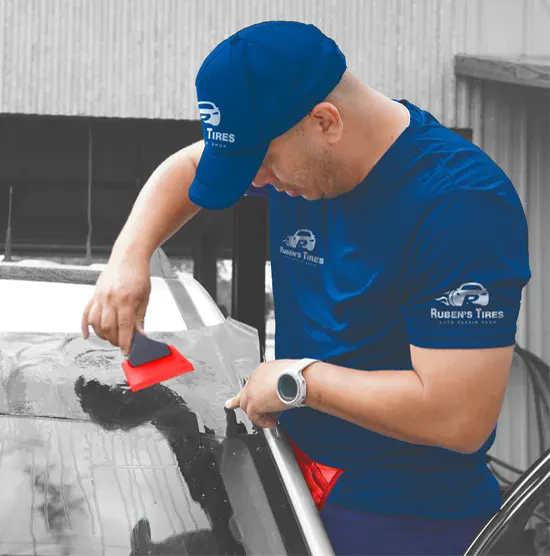
Good tint looks like it came from the factory: no bubbles, no dust specks, no gaps at the edges. The film goes on the inside of the glass and turns back part of the sun's light and heat before it reaches you and your seats.
- Heat. Film blocks much of the sun's heat coming through the glass, so the cabin stays cooler and the A/C works less.
- UV. It blocks much of the UV light that fades and cracks seats and dashboards.
- Glare. Softer light from the side at sunrise and sunset.
- Privacy. Keeps what's inside your car out of view.
- Film type. Some films mostly darken the glass; others are made to block more heat without being as dark. Ask which films the shop carries.
02 · Florida tint law
Florida tint law, in plain words
Florida limits how dark your tint can be, and the limit is measured by how much light still gets through the glass. On cars, the front side windows must let in at least 28% of light, and the windows behind the driver at least 15% (at least 6% on SUVs, vans and other multipurpose vehicles), under Florida Statutes 316.2953 and 316.2954.
The windshield has its own rule, so we keep film off it except where the law allows. We go by the rules for your type of vehicle and tell you your options at the counter.
Bought a car that already has tint? We can check how much light it lets through. If it's too dark, we can take it off and put on a legal shade.
03 · When to tint
Is it urgent, or can window tint wait?
Tint is not like brakes. Your car won't stop working without it. But there are times when it's worth doing sooner.
Do it soon
- Old tint bubbling or peeling so much it's hard to see out, especially the rear window.
- A used car with tint that may be too dark to be legal.
Worth planning
- Glare makes it hard to see at sunrise or sunset on your commute.
- Kids, older family or pets ride with you often in the summer heat.
- Old tint turned purple.
It can wait
- Your tint is a little faded but still clear, flat and legal.
- You park in a garage and drive mostly early or late.
A lot of drivers wait for summer, and that's when a tint shop gets busiest. If you can plan it for spring or fall, it's easier to get the day you want.
04 · What changes the cost
What changes the cost of window tinting
We don't list tint prices here, because the price changes with the car and the film. These move it most, so you know what to ask about. You get the price before any film goes on, and you approve it first.
05 · Florida sun
Why window tint matters more in Florida
In Central Florida the sun is strong most of the year, and cars sit in open parking lots for hours. Tint is one of the simplest ways to make a car easier to live with here.
Film blocks much of the heat and UV coming through the glass, protecting seats and dashboard from fading and cracking.
A car parked in the sun heats up within minutes. Tint helps the inside stay cooler.
Low sun on I-4, SR-436 and SR-50 at rush hour can be blinding. Tint softens it on the side windows.
Damp air slows how fast new film dries. It may look a little hazy for a few days. That's normal.
06 · Your visit
Your tint appointment, and how long it takes
- Pick the shade, within Florida lawWe show you samples and explain what's legal for your vehicle.
- Old tint off, glass cleanedOld film and glue come off; every window is cleaned more than once.
- Cut, shape and applyEach piece is cut to fit; curved glass is shaped with heat. Water is squeezed out so it sticks evenly.
- Check it togetherWe look over every window with you and go over the first days.
Walk-ins welcome; booking online gets you in faster, which helps in summer. Before you come, take out car seats, papers and stickers near the glass if you can. Open 7 days: Monday to Saturday 8:30 AM to 6 PM, Sunday 9 AM to 4 PM. Se habla español.
Tint words, in plain English
- VLT
- Visible light transmission: how much light gets through the glass and film. 28% means 28% of light gets through.
- Heat-blocking film
- Film made to stop more of the sun's heat without being very dark. It usually costs more than basic film.
- Tint removal
- Taking off old film and every bit of its glue before new film goes on. Slow on rear windows with defroster lines.
- Curing
- The days after install when leftover water dries out from under the film. Small haze is normal and fades.
- Multipurpose vehicle
- Florida's term for SUVs, vans and similar vehicles, which have their own limit for the back windows.
07 · Make it last
How to make your tint last
Good film can look good for years if it's treated right, especially in the first week.
For a few days, so the film sticks before the edge rubs on the seal. We tell you how long for your car.
It's moisture drying out and fades on its own, faster on sunny days.
A soft cloth and a cleaner without ammonia. Ammonia can damage film over time.
No razor blades, scrapers or rough sponges on the inside of the glass.
A buckle or ring that hits the window can nick the film.
Easier on the film and the whole car. See our Florida car care checklist.
08 · Where we do it
Window tint near you, in Apopka
Tinting needs a clean, calm space and the right tools, so we do it at one shop: our window tint bay in Apopka, at 339 W Main St. Drivers come to it from across Central Florida, including Orlando, Winter Park, Longwood, Winter Garden, Oviedo and Ocoee.
Ruben's Tires is a family shop, started by Ruben D. Feliz in 1994. Our Altamonte Springs and Orlando shops don't do tint, but they handle tires, oil changes and other repairs.
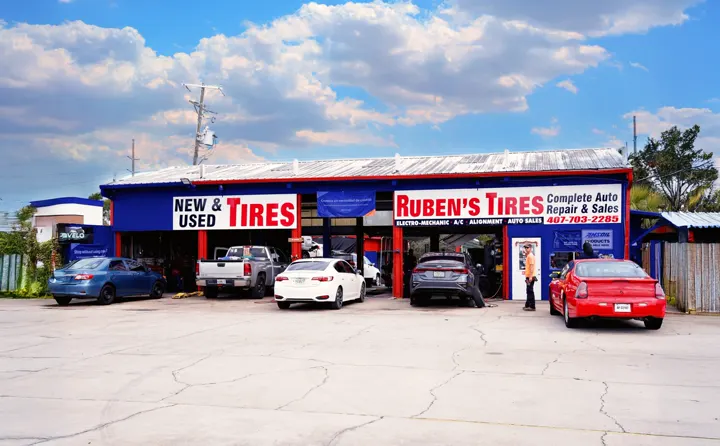 Apopka tint bay
Ready? Book your window tint online, or come by the Apopka shop.
09 · Questions
Questions drivers ask
What is the legal tint in Florida?
On cars, the front side windows must let in at least 28% of light, and the windows behind the driver at least 15% (at least 6% on SUVs, vans and other multipurpose vehicles), under Florida Statutes 316.2953 and 316.2954. Trucks, SUVs and vans have different limits for the back windows, and we'll tell you what applies to yours.
How long does window tint take?
Most cars take a few hours. Removing old tint first adds time, so ask the shop for a time when you book.
Will tint bubble in the Florida heat?
Film that is put on clean glass and cared for should not bubble. Tint usually bubbles when it's old, was installed over dirt, or used cheap glue that breaks down in the sun. A little haze in the first days is just moisture drying out and is normal.
When can I roll the windows down?
Wait a few days after tinting, and we'll give you the exact time for your car. Rolling them down too early can lift or peel the edge of the film before it has stuck.
Can you remove old, purple or bubbling tint?
Yes. We take off the old film and its glue, then put on fresh film. Removal adds time, especially on the rear window.
Will tint make it hard to see at night?
A legal shade still lets you see well at night for most drivers. If you drive a lot after dark or in heavy rain, ask us about a lighter shade or a film made to block heat without being very dark.
Can I pay for window tint over time?
You can ask about financing with Snap or Acima. Approval is based on your income and banking history, not your credit. Subject to approval. See Acima financing and Snap financing.